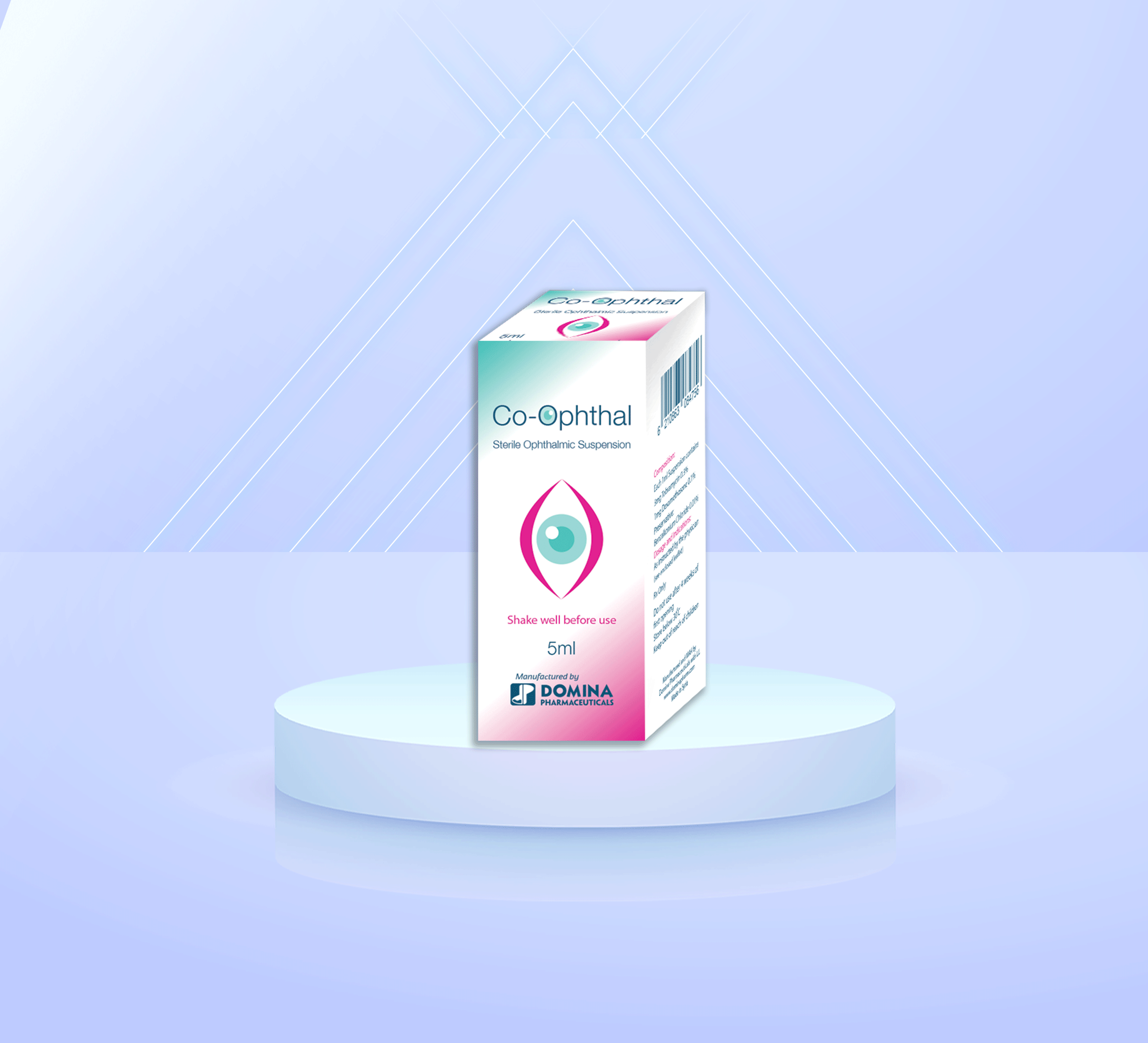
Composition:
Each 1ml Sterile Ophthalmic Suspension, contains 3mg Tobramycin and 1mg Dexamethasone.
Mechanism of action:
Dexamethasone:
The efficacy of corticosteroids for the treatment of inflammatory conditions of the eye is well established. Corticosteroids achieve their anti-inflammatory effects through suppression of vascular endothelial cell adhesion molecules, cyclooxygenase I or II, cytokine expression. This action culminates in a reduced expression of pro-inflammatory mediators and the suppression of adhesion of circulating leukocytes to the vascular endothelium, thereby preventing their migration into inflamed ocular tissue. Dexamethasone has marked anti-inflammatory activity with reduced mineralocorticoid activity compared with some other steroids, and is one of the most potent anti-inflammatory agents.
Tobramycin:
Tobramycin is broad-spectrum, rapidly bactericidal aminoglycoside antibiotic. On bacterial cells by inhibiting polypeptide assembly and synthesis on the ribosome. Tobramycin in this combination provides antibacterial protection against susceptible bacteria.
Pharmacokinetic:
Tobramycin: animal Studies have shown that tobramycin is absorbed into the cornea following ocular administration.
Following systemic administration to patients with normal renal function, a plasma half-life of approximately 2 hours has been observed. Tobramycin is eliminated almost exclusively by glomerular filtration with little if any biotransformation. Plasma concentrations of tobramycin following the 2-day topical ocular regimen of ophthalmic suspension was below the limit of quantification in most subjects or low (≤0.25 microgram/ml).
Dexamethasone: Following ocular administration, dexamethasone is absorbed into the eye with maximum concentrations in the cornea and aqueous humour attained within 1-2 hours. The plasma half-life of dexamethasone is approximately 3 hours. Dexamethasone is eliminated extensively as metabolites. Systemic exposure to dexamethasone is low following topical ocular administration of ophthalmic suspension. Peak dexamethasone plasma levels after the last topical dose ranged from 220 to 888pg/ml (mean 555 ± 217pg/ml) after administration of one drop of ophthalmic suspension to each eye four times per day for two consecutive days.
Indications:
- is indicated in the following cases:
- Prevention and treatment of inflammation.
- Prevention of infection associated with cataract surgery in adults and children aged 2 years and older.
Contraindications:
- Hypersensitivity to tobramycin or dexamethasone or to any of the excipients.
- Herpes simplex keratitis.
- Vaccinia, varicella and other viral disease of the cornea and conjunctiva.
- Mycobacterial infections of the eye caused by, but not limited to, acid-fast bacilli such as Mycobacterium tuberculosis, Mycobacterium leprae, or Mycobacterium avium.
- Fungal diseases of ocular structures or untreated parasitic eye infections.
- Untreated purulent infection of the eye.
Adults: One drop instilled into the conjunctival sac every 4 to 6 hours while the patient is awake. During the initial 24 to 48 hours, the dosage may be increased to one drop every two hours while the patient is awake. Dosing should continue for 14 days not to exceed a maximum of 24 days. Frequency should be decreased gradually as warranted by improvement in clinical signs. Care should be taken not to discontinue therapy prematurely.
Use in the Elderly: Clinical studies have indicated dosage modifications are not required for use in the elderly.
Pediatric population: Co-Ophthal may be used in children 2 years of age and older at the same dose as in adults.
The safety and efficacy of this ophthalmic suspension in children younger than 2 years of age have not been established
Use in hepatic and renal impairment: This ophthalmic suspension has not been studied in these patient populations.
Method of administrations:
- Shake the bottle well before use
- To prevent contamination of the dropper tip and suspension, care should be taken not to touch the eyelid, surrounding areas, or other surfaces with the dropper tip of the bottle.
- Keep the bottle tightly closed when not in use.
- Gently closing the eyelid (s) and nasolacrimal occlusion for at least 1 minute after instillation is recommended. This may reduce the systemic absorption of medicinal products administered via the ocular route and result in a decrease in systemic side effects.
- In case of concomitant therapy with other topical ophthalmic medicinal products, an interval of 5 minutes should be allowed between successive applications.
Warnings and precautions:
• For topical use only, not for injection or oral use.
• Prolonged use of topical ophthalmic corticosteroids (i.e., longer than the maximum duration used in clinical trials [24 days]) may result in ocular hypertension/glaucoma with resultant damage to the optic nerve and reduced visual acuity and visual fields defects and may also result in posterior subcapsular cataract formation.
• Visual disturbance may be reported with systemic and topical corticosteroid use. If a patient presents with symptoms such as blurred vision or other visual disturbances, the patient should be considered for referral to an ophthalmologist for evaluation of possible causes which may include cataract, glaucoma or rare diseases such as central serous chorioretinopathy (CSCR) which have been reported after use of systemic and topical corticosteroids.
• It is advisable that the intraocular pressure be checked frequently. This is especially important in pediatric patients receiving dexamethasone-containing products, as the risk of steroid-induced ocular hypertension may be greater in children below 6 years of age and may occur earlier than a steroid response in adults. The frequency and duration of treatment should be carefully considered, and the intraocular pressure should be monitored from the outset of treatment
• Cushing's syndrome and/or adrenal suppression associated with systemic absorption of ocular dexamethasone may occur after intensive or long-term continuous therapy in predisposed patients, including children and patients treated with CYP3A4 inhibitors. In these cases, treatment should be progressively discontinued.
• The risk of corticosteroid-induced raised intraocular pressure and/or cataract formation is increased in predisposed patients (e.g., diabetes).
• Prolonged use may also result in secondary ocular infections due to suppression of host response.
• Sensitivity to topically administered aminoglycosides may occur in some patients. Such as erythema, itching, urticarial, skin rash, anaphylaxis, anaphylactoid reactions, or bullous reactions. If hypersensitivity develops during use of this medicine, treatment should be discontinued.
• Caution is advised when this ophthalmic suspension eye drops are used concomitantly with systemic aminoglycosides.
• Cross-hypersensitivity to other aminoglycosides can occur, and the possibility that patients who become sensitized to topical tobramycin may also be sensitive to other topical and/or systemic aminoglycosides should be considered.
• Serious adverse reactions including neurotoxicity, ototoxicity and nephrotoxicity have occurred in patients receiving systemic aminoglycoside therapy.
• Caution should be exercised when prescribing this ophthalmic suspension to patients with neuromuscular disorders such as myasthenia gravis or Parkinson's disease. Aminoglycosides may aggravate muscle weakness.
• Fungal infection should be suspected in patients with persistent corneal ulceration. If fungal infection occurs, corticosteroids therapy should be discontinued.
• Prolonged use of antibiotics such as tobramycin may result in overgrowth of non-susceptible organisms, including fungi. If superinfection occurs, appropriate therapy should be initiated.
• Topical ophthalmic corticosteroids may slow corneal wound healing. Topical NSAIDs are also known to slow or delay healing. Concomitant use of topical NSAIDs and topical steroids may increase the potential for healing problems.
• In those diseases causing thinning of the cornea or sclera, perforations have been known to occur with the use of topical corticosteroids.
• Benzalkonium chloride that used as a preservative has been reported to cause punctate keratopathy and/or toxic ulcerative keratopathy. Benzalkonium chloride may cause eye irritation and discolor soft contact lenses.
• Contact lens wear is not recommended during treatment of an ocular infection or inflammation. If patients are allowed to wear contact lenses, they must be instructed to remove lenses prior to application of this ophthalmic suspension and wait at least 15 minutes before reinsertion.
• As with any eye drop, temporarily blurred vision or other visual disturbance may affect the ability to drive or use machines.
Side Effects:
Uncommon side effects:
- Nervous system disorders: headache.
- Eye disorders: eye pain, eye pruritus, ocular discomfort, ocular hypertension, conjunctival oedema, eye irritation.
- Respiratory, thoracic, and mediastinal disorders: rhinorrhea, laryngospasm.
Common Adverse reactions following use of Dexamethasone ophthalmic suspension:
- Nervous system disorders: headache.
- Eye disorders: eye irritation, ocular hyperemia, erythema of eyelid, abnormal sensation in eye.
- Respiratory, thoracic, and mediastinal disorders: post nasal drip.
Adverse reactions following use of Tobramycin ophthalmic solution:
Eye disorders:
- Common: ocular hyperemia, eye pain.
- Uncommon: eye pruritus, ocular discomfort, eye allergy, eyelid oedema, conjunctivitis, glare, increased lacrimation, keratitis.
Pregnancy:
There are no or limited amount of data from the topical ocular use of tobramycin and dexamethasone in pregnant women. Tobramycin does cross the placenta into the fetus after intravenous dosing in pregnant women. Tobramycin is not expected to cause ototoxicity from in utero exposure. Prolonged or repeated corticoid use during pregnancy has been associated with an increased risk of intra-uterine growth retardation. Infants born of mothers who have received substantial doses of corticosteroids during pregnancy should be observed carefully for signs of hypoadrenalism. This ophthalmic suspension is not recommended during pregnancy.
Breast-feeding:
Tobramycin is excreted in human milk after systemic administration. No data is available on the passage of dexamethasone into human breast milk. It is unknown whether tobramycin and dexamethasone are excreted in human milk following topical ocular administration. It is not likely that the amount of Tobramycin and Dexamethasone would be detectable in human milk or be capable of producing clinical effects in the infant following topical use of the product.
A risk to the suckling child cannot be excluded. A decision must be made whether to discontinue breast-feeding or to discontinue/abstain from therapy taking into account the benefit of breast feeding for the child and the benefit of therapy for the woman.
Drug Interactions:
- No clinically relevant interactions have been described with topical ocular dosing.
• Concomitant use of topical steroids and topical NSAIDs may increase the potential for corneal healing problems.
• Dexamethasone is metabolized via cytochrome P450 3A4 (CYP3A4). CYP3A4 inhibitors (including ritonavir and cobicistat); may decrease dexamethasone clearance resulting in increased effects and adrenal suppression/Cushing's syndrome. The combination should be avoided unless the benefit outweighs the increased risk of systemic corticosteroid side-effects, in which case patients should be monitored for systemic corticosteroid effects.
Overdose:
Due to the characteristics of this preparation, no toxic effects are to be expected with an ocular overdose of this product, or in the event of accidental ingestion of the contents of one bottle or tube. A topical overdose of this ophthalmic suspension may be flushed from the eye(s) with lukewarm tap water.