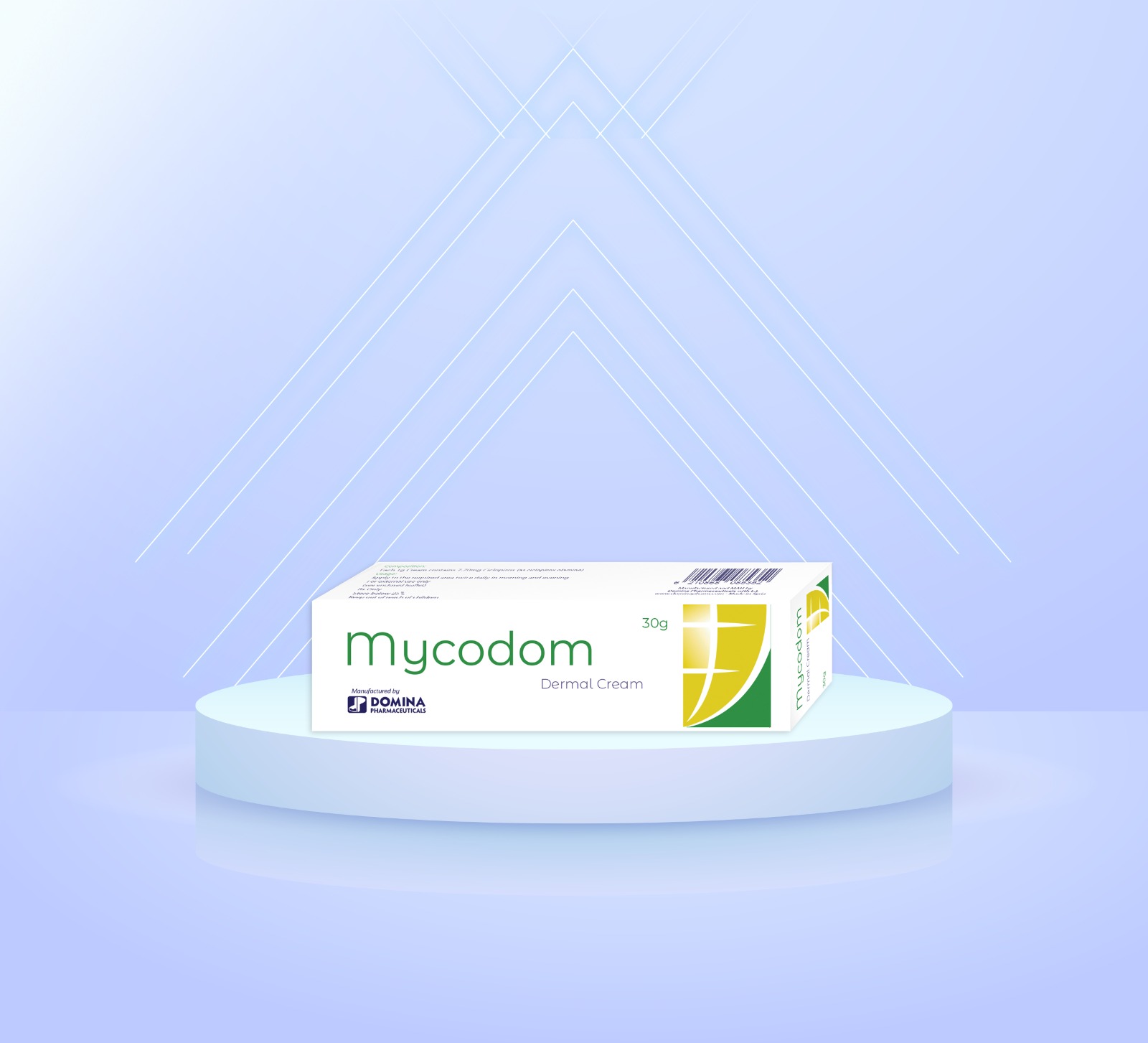
Composition:
Each 1g cream contains 7.70mg Ciclopirox (as Ciclopirox Olamine).
Excipient:
Octyldodecanol, myristyl alcohol, mineral oil, stearyl alcohol, purified water, cetyl alcohol, polysorbate 60, sorbitan monostearate, lactic acid, benzyl alcohol, cocamide DEA.
Mechanism of action:
Ciclopirox is a hydroxypyridone antifungal agent that acts by chelation of polyvalent cations (Fe+3 or Al+3), resulting in the inhibition of the metal-dependent enzymes that are responsible for the degradation of peroxides within the fungal cell.
Pharmacokinetic properties:
The biological half-life was 1.7 hours and excretion occurred via the kidney.
Indications:
Mycodom Cream is indicated for the topical treatment of the following dermal infections: tinea pedis, tinea cruris, and tinea corporis due to Trichophyton rubrum, Trichophyton mentagrophytes, Epidermophyton floccosum, and Microsporum canis; candidiasis (moniliasis) due to Candida albicans; and tinea (pityriasis) versicolor due to Malassezia furfur.
Contraindications:
Ciclopirox cream is contraindicated in individuals who have shown hypersensitivity to any of its components.
Warnings and Precautions:
- Ciclopirox Olamine cream is not for ophthalmic use.
- Keep out of reach of children.
- If a reaction suggesting sensitivity or chemical irritation should occur with the use of Ciclopirox Olamine cream, treatment should be discontinued and appropriate therapy instituted.
- The patient should be told to:
- Use the medication for the full treatment time even though symptoms may have improved and notify the physician if there is no improvement after four weeks.
- Inform the physician if the area of application shows signs of increased irritation (redness, itching, burning, blistering, swelling, or oozing) indicative of possible sensitization.
- Avoid the use of occlusive wrappings or dressings.
Undesirable effects:
It included pruritus at the site of application, burning and worsening of the clinical signs and symptoms.
Pregnancy and lactation:
Pregnancy Category B. Ciclopirox Olamine cream should be used during pregnancy only if the potential benefit justifies the potential risk to the fetus.
No maternal toxicity. Caution should be exercised when Ciclopirox Olamine cream is administered to a nursing woman.
Posology and method of administration:
Gently massage Mycodom Cream into the affected and surrounding skin areas twice daily, in the morning and evening. Clinical improvement with relief of pruritis and other symptoms usually occurs within the first week of treatment. If a patient shows no clinical improvement after four weeks of treatment with Mycodom Cream, the diagnosis should be redetermined. Patients with tinea versicolor usually exhibit clinical and mycological clearing after two weeks of treatment.
Safety and effectiveness in pediatric patients below the age of 10 years have not been established.