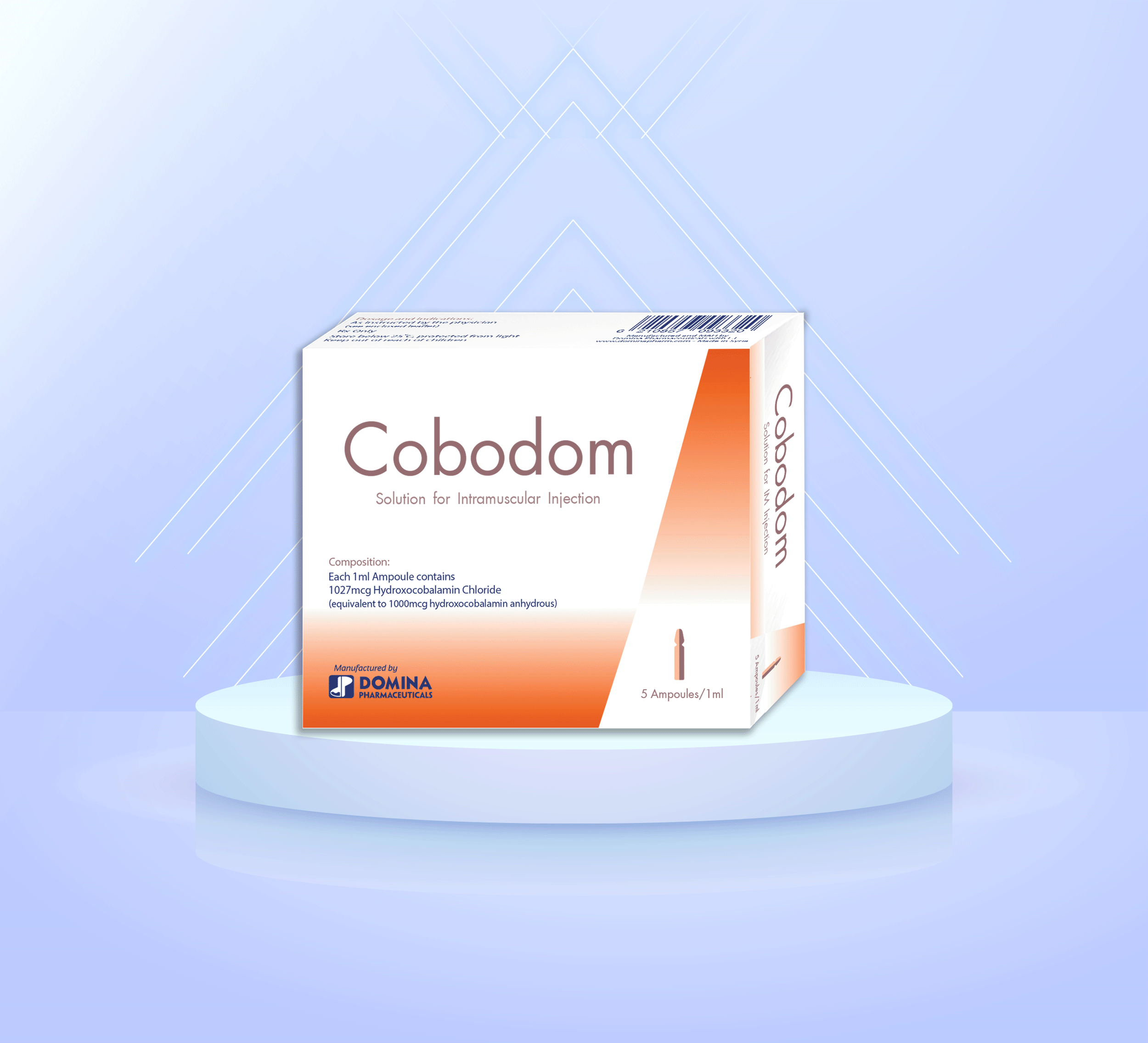
Composition:
Each ampoule 1ml contains 1027mcg Hydroxocobalamin Chloride equivalent to 1000mcg Hydroxocobalamin Anhydrous.
Mechanism of action:
Anti-anaemic preparations - Vitamin B12.
Pharmacokinetic properties:
Distribution
Vitamin B12 is extensively bound to specific plasma proteins called transcobalamins, transcobalamin II appears to be involved in the rapid transport of the cobalamins to tissues.
Elimination:
Vitamin B12 is stored in the liver, excreted in the bile, and undergoes extensive enterohepatic recycling; part of an administered dose is excreted in the urine, most of it in the first 8 hours; urinary excretion, however, accounts for only a small fraction in the reduction of total body stores acquired by dietary means. Vitamin B12 diffuses across the placenta and also appears in breast milk.
An intramuscular injection of hydroxocobalamin produces higher serum levels than the same dose of cyanocobalamin, and these levels are well maintained. After injection of hydroxocobalamin, 90% of a 100-microgram dose and 30% of a 1000 microgram dose are retained.
Indications:
- Addisonian pernicious anaemia.
- Prophylaxis and treatment of other macrocytic anaemias associated with vitamin B12 deficiency.
- Tobacco amblyopia and Leber's optic atrophy.
Contraindications:
Hypersensitivity to any ingredient of the preparation.
Posology:
Adults and Children:
- Addisonian pernicious anaemia and other macrocytic anaemias without neurological involvement:
- Initially: 250 to 1000mcg on alternate days for one to two weeks, then 250mcg weekly until the blood count is normal.
- Maintenance: 1000mcg every two to three months.
- Addisonian pernicious anaemia and other macrocytic anaemias with neurological involvement:
- Initially: 1000mcg on alternate days as long as improvement is occurring
- Maintenance: 1000mcg every two months.
- Prophylaxis of macrocytic anaemia associated with vitamin B12 deficiency resulting from gastrectomy, some malabsorption syndromes and strict vegetarianism:
1000mcg every two to three months.
- Tobacco amblyopia and Leber's optic atrophy:
- Initially: 1000mcg or more daily for two weeks. Then twice weekly as long as improvement is occurring.
- Maintenance: 1000mcg monthly.
Method of administration:
Intramuscular injection.
Warnings and precautions:
- The dosage schemes given above are usually satisfactory, but regular examination of the blood is advisable.
- If megaloblastic anaemia fails to respond to hydroxocobalamin, folate metabolism should be investigated.
- Doses in excess of 10mcg daily may produce a haematological response in patients with folate deficiency. Indiscriminate administration may mask the true diagnosis. The haematological and neurological state should be monitored regularly to ensure adequacy of therapy.
- Cardiac arrhythmias: Cardiac arrhythmias secondary to hypokalaemia during initial therapy have been reported. Plasma potassium should therefore be monitored during this period.
- Reactive thrombocytosis Platelet count should be monitored during the first weeks of use in megaloblastic anaemia due to the possible occurrence of reactive thrombocytosis.
Undesirable effects
The following effects have been reported and are listed below by body system:
- Blood and lymphatic system disorders: Reactive thrombocytosis can occur during the first weeks of use in megaloblastic anaemia.
- Cardiovascular disorders: Arrhythmias secondary to hypokalaemia.
- Disorders of the immune system: Hypersensitivity reactions including skin reactions (e.g., rash, itching) and exceptionally anaphylaxis.
- Gastro intestinal disorders: Nausea, vomiting, diarrhoea.
- General disorders: Fever, chills, hot flushing, dizziness, malaise, pain. Injection site reactions including injection site pain, injection site erythema, injection site pruritus, injection site induration, and injection site swelling.
- Neurological disorders: Headache, sensory abnormalities such as paraesthesia Tremor.
- Renal and urinary disorders: Chromaturia
- Skin and subcutaneous tissue disorders: Acneiform and bullous eruptions.
Interaction with other medicines:
- Chloramphenicol: Chloramphenicol-treated patients may respond poorly to hydroxocobalamin anhydrous.
- Oral contraceptives: Serum concentrations of hydroxocobalamin may be lowered by oral contraceptives but this interaction is unlikely to have clinical significance.
- Antimetabolites and most antibiotics invalidate vitamin B12 assays by microbiological techniques.
Pregnancy:
Hydroxocobalamin anhydrous should not be used for the treatment of megaloblastic anaemia of pregnancy unless vitamin B12 deficiency has been demonstrated.
Breast-feeding:
Hydroxocobalamin anhydrous is secreted into breast milk but this is unlikely to harm the infant, and may be beneficial if the mother and infant are vitamin B12 deficient.
Overdose:
Treatment is unlikely to be needed in cases of overdosage.