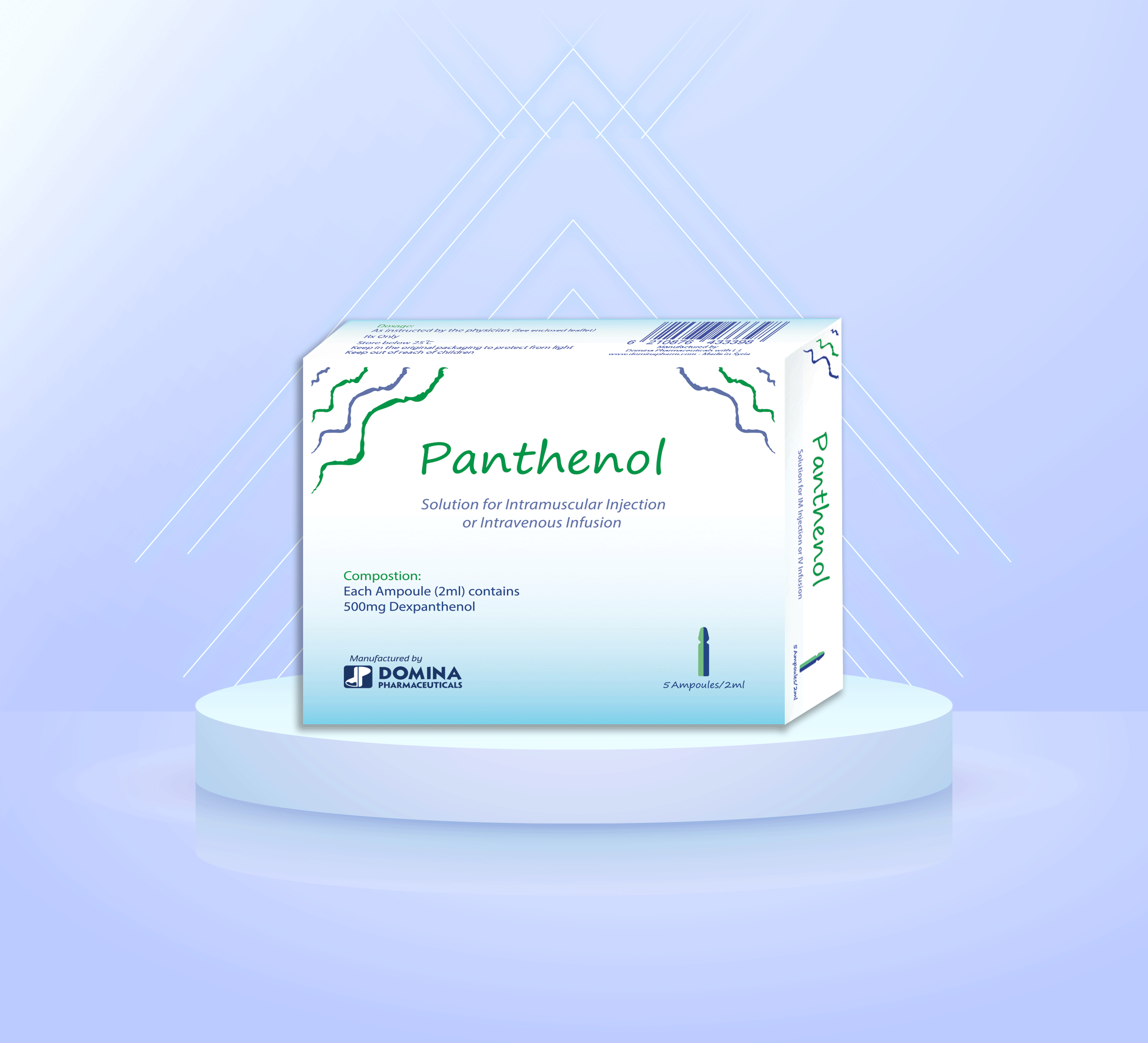
Composition: Each 1 ampoule contains 500mg Dexpanthenol (250mg/ml)
Mechanism of Action:
Pantothenic acid is a precursor of coenzyme A, which serves as a cofactor for a variety of enzyme-catalyzed reactions involving transfer of acetyl groups. The final step in the synthesis of acetylcholine consists of the choline acetylase transfer of acetyl group from acetyl coenzyme A to choline. Acetylcholine is the neurohumoral transmitter in the parasympathetic system and as such maintains the normal functions of the intestine. Decrease in acetylcholine content would result in decreased peristalsis and in extreme cases a dynamic ileus. The pharmacological mode of action of the drug is unknown.
Pharmacokinetics
Absorption: Dexpanthenol is quickly absorbed both enterally and parenterally as well as through the skin and is immediately converted into the vitamin pantothenic acid.
Distribution: In the blood, pantothenic acid is bound to plasma proteins (mainly β-globulin and albumin). In healthy adults, about 500-1000 µg/l is found in whole blood and about 100 µg/l in serum.
Elimination: Pantothenic acid is not broken down in the organism, but excreted unchanged.
Adults excreted 2-7 mg daily in the urine and 2-3 mg in children.
Indications
Prevention and treatment of postoperative intestinal atony, paralytic ileus, acroparesthesia due to pantothenic acid deficiency.
For resorption disorders and to treat burning feet syndrome as well as to support local treatment.
Contraindications
Panthenol should not be used if you are known to be hypersensitive to any of the active ingredients or excipients.
Panthenol should not be administered to patients suffering from mechanical ileus.
Warnings & Precautions
- Administration of Panthenol Injection directly into the vein is not advised
- Panthenol Injection should not be administered within one hour of succinylcholine
- If ileus is a secondary consequence of mechanical obstruction, primary attention should be directed to the obstruction.
The management of a dynamic ileus includes the correction of any fluid and electrolyte imbalance(especially hypokalemia), anemia and hypoproteinemia, treatment of infection, avoidance where possible of drugs which are known to decrease gastrointestinal motility and decompression of the gastrointestinal tract when considerably distended by nasogastric suction or use of a long intestinal tube.
Adverse Reactions
In very rare cases, allergic skin reactions can be observed (itching, tingling, difficulty in breathing, red patches of skin, generalized dermatitis and urticaria).
General disorders and administration site conditions
Injuries and other complications are possible.
Pregnancy and lactation
Pregnancy
Pregnancy Category C. There are no controlled studies available in animals or pregnant women.
The medicine should not be administered during pregnancy unless clearly necessary.
lactation
It is unclear whether dexpanthenol and its metabolites are excreted in breast milk.
Since there are only insufficient clinical studies available, it is recommended not to administer dexpanthenol during breastfeeding.
Dosage and Application
This product is FOR INTRAMUSCULAR USE or INTRAVENOUS USE AFTER DILUTION.
Postoperative intestinal atony:
Prophylaxis: 1000mg IV during or immediately after the operation(also as an addition to the continuous drip infusion).
Therapy: 1000mg IV or IM, repeat every six hours if necessary.
For absorption disorders and to treat burning feet syndrome as well as to support local treatment: 500 mg IM or IV daily or several times aweek.
Children depending on age, (250-500 mg) daily.
Prevention of post-operative adynamic ileus: 250mg (1mL) or 500 mg (2mL) intramuscularly. Repeat in 2 hours and then every 6 hours until all danger of adynamic ileus has passed.
Treatment of adynamic ileus: 500 mg (2mL) intramuscularly. Repeat in 2 hours and then every 6 hours as needed.
Intravenous administration: Dexpanthenol Injection 500mg (2mL) may be mixed with bulk I.V. solutions such as glucose or Lactated Ringer’s and slowly infused intravenously.